


Is your hair falling out more than it should?
Alopecia or effluvium: every case of hair loss has its own cause, and treatment starts by understanding it. Medical assessment in Algés, with a plan made for you.
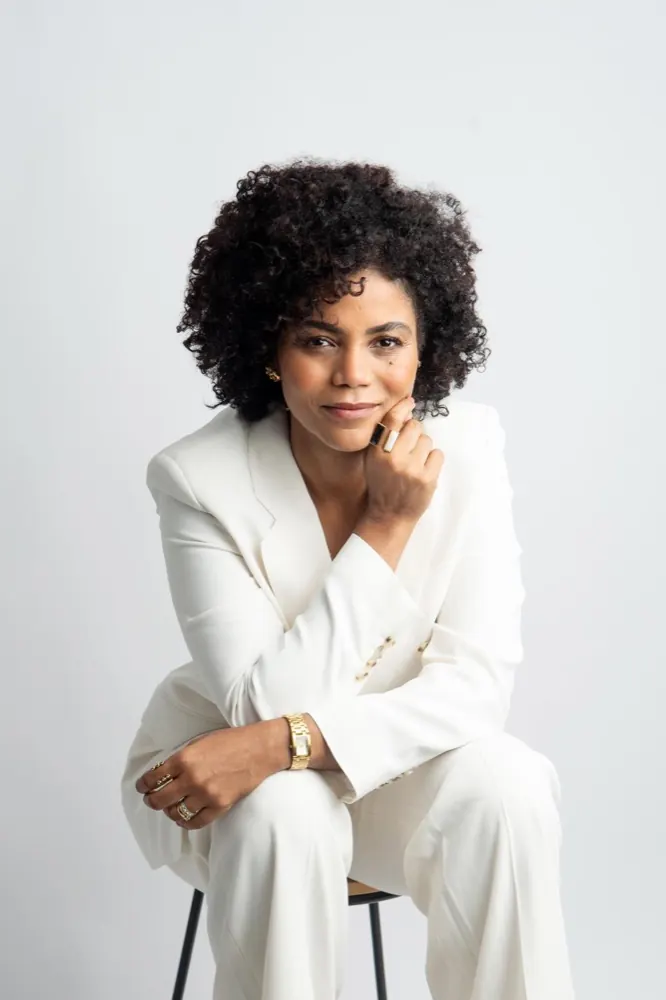 Dr. Michelle CampagnoliCédula OM 69467 · Algés
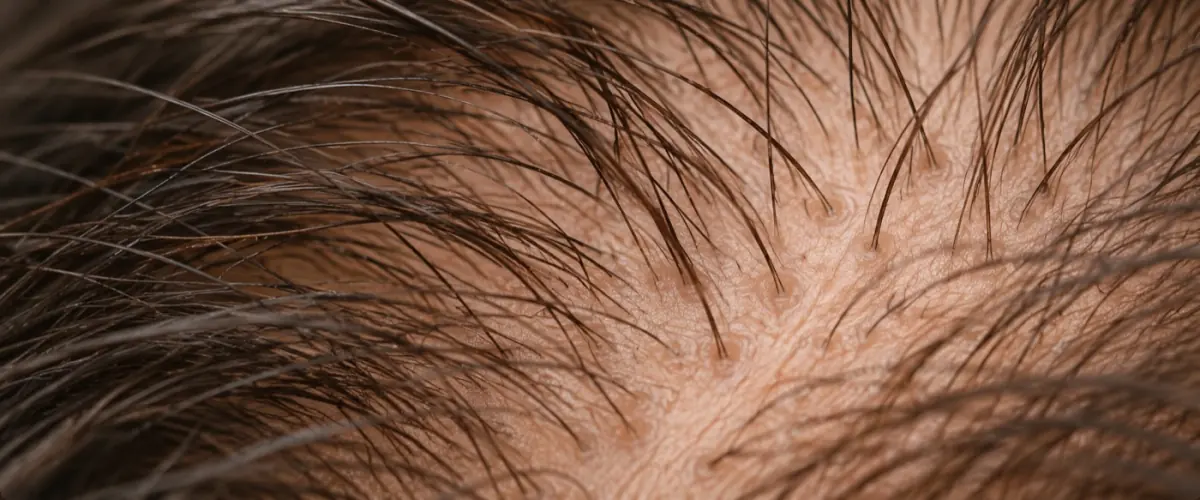
hairs a day is the number usually said to fall out normally. If you notice quite a lot more than that, or less density, it is worth finding out why.

Hair doesn't fall out the same way in women and in men
The pattern, when it starts and the most common causes are different. Choose one to see what usually happens.
Two causes, two paths
They look alike, but they are not the same, and the treatment is different. Only the doctor can tell them apart.
Alopecia
Gradual loss of density
- How it shows
- Receding hairline, a wider parting or less hair on top
- When it starts
- Gradually, over months or years
- Where
- In defined areas of the head
- Progression
- It tends to progress if left untreated
Effluvium
Diffuse shedding, all of a sudden
- How it shows
- More hair on the brush and in the drain, all over the head
- When it starts
- Weeks or months after stress, illness, childbirth, a restrictive diet or rapid weight loss
- Where
- All over the head, with no defined areas
- Progression
- Often temporary once the cause passes
They can occur at the same time. That is why the assessment always comes first.
Why everything takes months
Each hair lives in cycles. Tap a phase to see what happens.
What do you notice?
Tick what applies. It helps you describe your case at the appointment. It is not a diagnosis.

You can tick several.
Request an assessmentWhat people most want to know
The questions people ask most about hair loss. Choose one and see the answer.
The treatments at Luxmed
None suits everyone. The doctor chooses, and combines, what makes sense for your cause.

Initial consultation
Getting to know the health of the scalp and the hair, through a physical examination and a detailed medical assessment, to define the most suitable hair treatment plan.
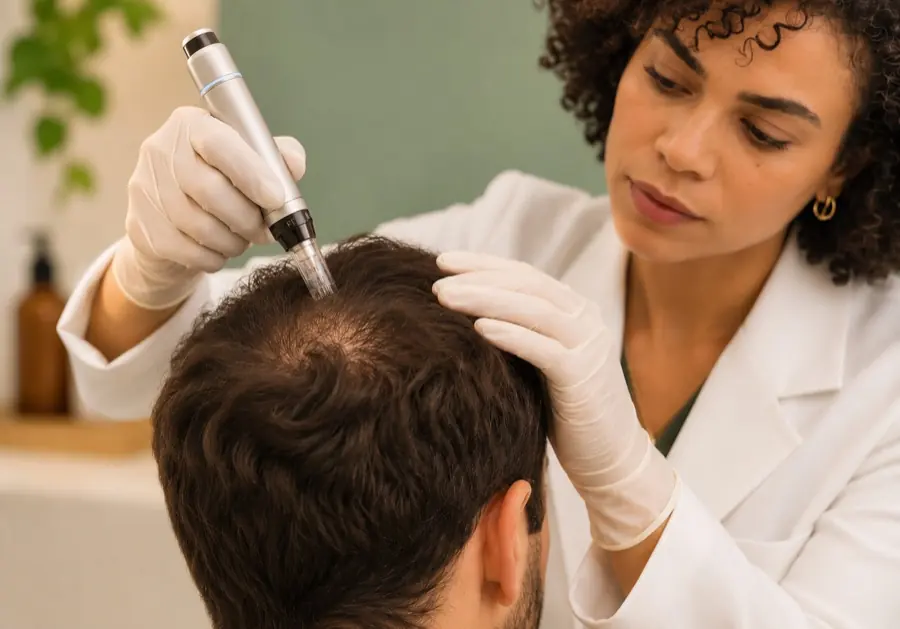
Scalp microneedling
Stimulating growth and strengthening the hair, by inducing collagen and applying regenerating active ingredients directly to the scalp.
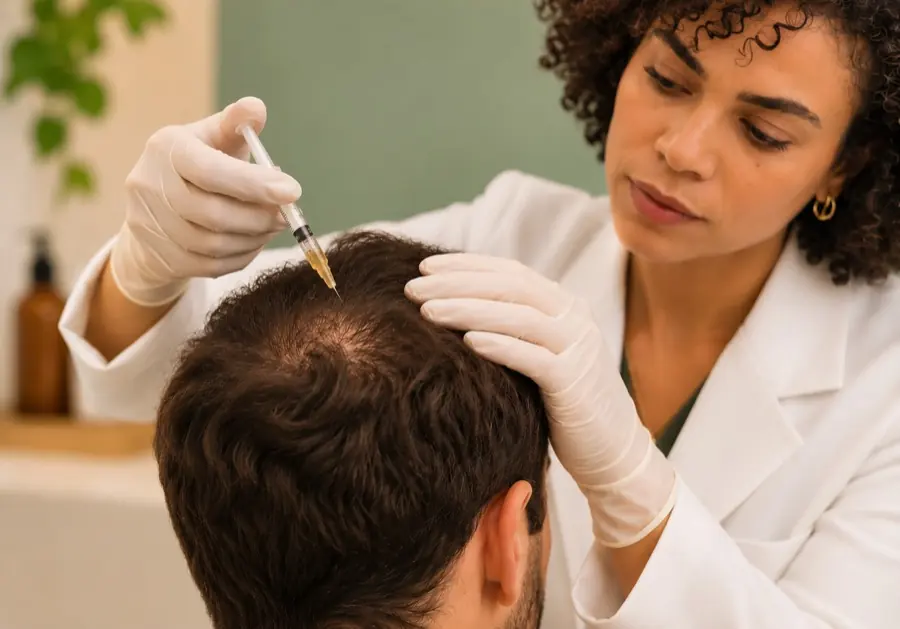
Scalp intradermal therapy
Nourishing and revitalizing the scalp with vitamins, minerals and biostimulators, supporting hair growth.

Conservative oral therapy
Promoting hair strengthening and preventing hair loss, through supplements and oral medication, under medical supervision.
From first contact to follow-up
Four simple steps, always with the doctor and never rushed.
Request contactMedical assessment
The doctor examines your scalp, listens to your story and looks for the cause of the hair loss.
No obligation
Tests, if useful
When it makes sense, blood tests are requested to identify causes such as nutritional deficiencies or hormonal changes.
Only when indicated
A plan tailored to you
The treatment is chosen for your cause and explained clearly, with no pressure.
Personalised plan
Follow-up
Reassessment over the months to adjust the plan. Hair responds slowly.
Ongoing care
Who will look after your case
Dr. Michelle Campagnoli, clinical director of Luxmed (Cédula OM 69467). She qualified in Medicine in 2002 and has built her career across anesthesiology, pain medicine and aesthetic medicine. She works with attentive listening, safety and a natural approach.
- 2002Degree in Medicine, UFRJ
- 2012Postgraduate degree in Pain Medicine, UERJ
- 2019Master's in Medicine, recognition by the University of Lisbon
- 2022Specialty in Anesthesiology, Ordem dos Médicos (Portuguese Medical Association)
- 2025Competence in Aesthetic Medicine, Ordem dos Médicos
What people who have visited us say
Dr Michelle is one of the most attentive doctors I have ever met. She explains everything in detail and is very available and highly professional.
Silvana Letrasa year agoExceptional doctor. Great knowledge, innovative techniques, care and dedication. A very modern clinic with an excellent location.
Fernanda Oliveira7 months agoExcellent service, from the explanation of the procedures to the precision and care in the procedures carried out.
José Bugalhão10 months agoThe first step is a conversation
- In-person medical assessment of the scalp and the hair loss
- Explanation of the cause and of the options suited to your case
- No obligation to start any treatment
Payment in instalments, with no interest or fees. Once the doctor defines your plan, you can pay in 2 to 6 monthly instalments with Parcela Já com UNICRE (an instalment payment service; Portuguese Visa and Mastercard cards, purchases between €40 and €3,000).
See termsWhat is alopecia?
It is hair loss that can be gradual and reduce density in areas such as the hairline, the top of the head or the parting. There are several causes, and the most common is androgenetic alopecia, linked to heredity and hormones. The doctor identifies the type in your case.
What is effluvium?
It is diffuse hair loss, all over the head, in which more hairs than usual enter the shedding phase at the same time. It usually appears weeks or months after a trigger such as stress, illness, fever, childbirth, a very restrictive diet, rapid weight loss or certain medications. It is often temporary, but the doctor assesses your case.
How do I know whether I have alopecia or effluvium?
You cannot tell them apart on your own, because the signs can look alike. The doctor examines your scalp, listens to your story and, when needed, requests tests to find the cause.
I lost weight, for example with tirzepatide, and my hair is falling out. Is that normal?
Rapid weight loss is one of the known triggers of effluvium. Do not stop any medication on your own: talk to the doctor who prescribed it and book an assessment to understand what is happening in your case.
What treatments are there?
It depends on the cause. The doctor defines the plan after the assessment, and it may include several options. That is why we do not promise a treatment before understanding your case.
Do I need tests?
Not always. When the doctor finds it useful, she may request blood tests to look for causes such as hormonal changes or nutritional deficiencies.
How many consultations or sessions will I need?
It varies from person to person and depending on the cause. After the assessment, the doctor tells you what to expect and when to reassess.
When will I see results?
Hair grows slowly, so results usually take months. They vary from person to person and are not guaranteed.
Does the hair grow back?
It depends on the cause. In effluvium, hair often recovers once the cause passes. In alopecia, the aim is usually to slow the loss and improve density, and the doctor explains what is realistic in your case.
Are results guaranteed?
No. Results vary from person to person and depend on each case. That is why we do not promise them before the consultation.
Do the results last?
In alopecia, continuing the treatment is usually important to maintain the results. The doctor plans the follow-up with you.
Do the treatments have risks or side effects?
Any treatment can have side effects. The doctor explains the risks, the alternatives and what to expect before any decision, and assesses whether there is any reason not to do it in your case.
Should I stop my medication if my hair is falling out?
No. Do not stop or change any medication on your own. Talk to the doctor who prescribed it and bring the list of your medications to the consultation.
Can I pay for the treatment in instalments?
Yes. Once you have your treatment plan, you can pay for it in 2 to 6 monthly instalments, with no interest or fees, with Parcela Já com UNICRE (an instalment payment service). Portuguese Visa and Mastercard credit or debit cards are accepted, and the first instalment is paid at the time of payment. The conditions are those of Parcela Já com UNICRE, and we explain everything at the consultation.
Do I need to prepare anything for the consultation?
It helps to bring the list of medications and supplements you take, recent tests, if you have them, and an idea of when the hair loss began. If you can, bring photographs of your hair over time.
Does the pre-assessment replace the consultation?
No. It lets the clinic understand your case and prepare the consultation. Only the doctor can tell the cause of the hair loss and propose a plan.
How much does the consultation cost?
The medical assessment consultation costs €100. Anyone who books through this page by 31 December 2026 pays €70. The cost of any treatment is set only after the medical assessment.
We could not find that question. Ask us on WhatsApp
Leave your contact details and we will get in touch
Fill it in in under a minute. Our team will contact you to arrange your assessment consultation with Dr. Michelle Campagnoli.

Request received
Thank you. Our team will contact you.
Reference:
Where are you coming from? We will guide you to us
Choose your starting point and we will tell you how to reach the clinic, by car, train, bus or plane.

1. Region
2. Town or area
New Life Miraflores
Office Center, R. Santa Teresa do Menino Jesus n.º 6, 9.º C
Miraflores, 1495-048 Algés
- Monday to Saturday09:00–13:00 · 14:00–19:00
- SundayClosed
Tell us where you are coming from.
Type the name of your town or area, or choose the region and the town (Portugal, Europe or Portuguese-speaking countries). We show the driving time and how to continue by public transport or by air.
Driving distances and times are calculated using OpenStreetMap (OSRM) data, without traffic. Flight times are estimates.